Hummus with Warm Bread
Hummus with Warm Bread is a delightful combination that brings together creamy, rich hummus and soft, warm pita. This dish is perfect for gatherings, light meals, or as a healthy snack. Originating from the Middle East, hummus has gained worldwide popularity for its versatility and nutrition. The smooth texture and bold flavors make it a favorite among both vegetarians and meat-lovers alike. Pairing it with warm bread enhances the experience, creating a comforting and satisfying dish.


Why This Hummus with Warm Bread Works
The key to a great hummus lies in selecting high-quality ingredients. Freshly cooked chickpeas, good tahini, and premium olive oil all contribute to a creamy texture and rich flavor. Blending the chickpeas with tahini and olive oil not only enhances the taste but also creates an emulsion that gives hummus its smooth consistency. Additionally, adjusting the water content allows you to control the creaminess, making it adaptable to your preferences.
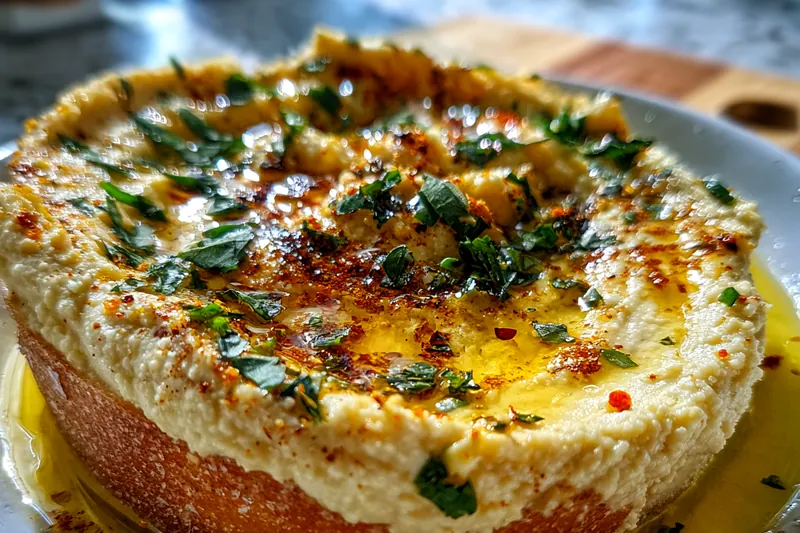
What makes this dish special is the combination of flavors and textures. The warm, soft pita bread complements the smooth hummus perfectly, making each bite delightful. The drizzle of olive oil adds richness, while the paprika and parsley provide a pop of color and freshness. This dish is not only satisfying but also packed with protein, fiber, and healthy fats, making it a nutritious option for everyone.
💡 Professional Tip
For an even creamier hummus, consider peeling the chickpeas before blending. This extra step might take a bit of time, but it makes a significant difference in texture. Additionally, using fresh lemon juice instead of bottled lemon juice enhances the flavor. If you want to elevate your dish, experiment with different spices or toppings, such as roasted red peppers or olives.
Frequently Asked Questions
Yes, you can prepare the hummus ahead of time and store it in the refrigerator for up to a week. Just make sure to keep it in an airtight container to maintain freshness. If you're planning to serve it later, consider reheating the pita bread just before serving for the best experience. This way, you can enjoy the flavors of your hummus with the warmth of freshly baked bread.
If you're looking for alternatives, you can use white beans or lentils in place of chickpeas for the hummus. For a nut-free version, skip the tahini and use sunflower seed butter instead. As for pita bread, any flatbread or tortilla will work well. Feel free to customize the spices and add-ins to cater to your taste preferences.
Your hummus is ready when it reaches a smooth and creamy consistency. Taste it to ensure the flavors are balanced, adjusting salt and lemon juice as necessary. The pita bread is done when it is warm and slightly crispy, but not burnt. Keep an eye on it while baking to achieve the perfect texture.
Yes, you can freeze hummus for up to three months. It’s best to store it in a freezer-safe container, leaving some room for expansion. When you're ready to enjoy it, thaw it in the refrigerator overnight and give it a good stir before serving. However, freezing pita bread is not recommended due to its texture change upon thawing.
In addition to warm pita bread, you can serve hummus with a variety of dippers such as fresh vegetables like carrot sticks, cucumber slices, or bell pepper strips. It also pairs well with crackers, chips, or even as a spread on sandwiches. Adding olives or pickles on the side can enhance the Mediterranean experience.
Homemade hummus can be stored in the refrigerator for up to a week. Ensure it's kept in an airtight container to preserve its freshness. If you notice any separation, simply stir it before serving. Warm bread is best enjoyed fresh, but you can store leftovers wrapped in foil or a container for a day or two.
To adjust the spice level of your hummus, consider adding a pinch of cayenne pepper or red pepper flakes for a kick. Conversely, if you prefer a milder flavor, reduce the amount of garlic or omit it altogether. Experiment with different spices to find the perfect balance for your palate. You can also serve additional spices on the side for guests to customize their servings.
The best way to reheat pita bread is to wrap it in foil and place it in a preheated oven at 350°F (175°C) for about 10 minutes. Alternatively, you can warm them in a skillet over medium heat for a few minutes on each side. Make sure not to overheat them, as they can become tough. For hummus, you can simply stir it to restore its original texture after thawing.
Recipe Troubleshooting Guide
Too Dry
Problem: If your hummus turns out too dry, it may be due to a lack of sufficient liquid during blending.
Solution: To fix this, gradually add more water or olive oil while blending until you reach the desired consistency. Taste and adjust the seasoning if necessary.
Not Crispy
Problem: If your pita bread isn't crispy, it may not have been baked long enough or at a high enough temperature.
Solution: Ensure your oven is properly preheated, and consider increasing the baking time slightly. For an extra crunch, you can broil the bread for a minute or two at the end of baking.
Overcooked
Problem: Overcooked hummus can lose its creamy texture and become too thick or grainy.
Prevention: If this happens, blend in a little water or olive oil to restore moisture and creaminess. Adjust the seasoning again if necessary.
Undercooked
Problem: Undercooked hummus may have a gritty texture, especially if the chickpeas were not cooked thoroughly.
Recovery: Ensure to blend until completely smooth and consider using canned chickpeas for convenience. If using dried chickpeas, soak them properly and cook until tender before blending.
Burnt
Problem: If your pita bread is burnt, it may have been left in the oven too long or at too high a temperature.
Prevention: Monitor the baking time and adjust the oven temperature if necessary. You can also try covering the bread with foil to prevent excessive browning while it heats.
Flavor Balance
Too Sweet: If your hummus tastes too sweet, it might be due to too much lemon juice or tahini.
Too Salty: A salty flavor can come from over-seasoning with salt or using store-bought tahini that is already salted.
Bland: If your hummus is bland, consider adding more lemon juice, garlic, or salt to enhance its flavor profile.

Key Ingredients
The main ingredient in hummus is chickpeas, which are packed with protein and fiber. These legumes provide a creamy base that is rich in nutrients, making hummus a healthy choice. Tahini, made from ground sesame seeds, adds a nutty flavor and helps achieve the desired smooth texture. Fresh garlic and lemon juice enhance the flavor, giving the hummus a zesty kick.
Seasonings like cumin and salt are essential to create a balanced taste. Olive oil not only adds richness but also contributes to the creamy consistency. For the pita bread, high-quality flour and water are key to achieving the perfect softness. You can also experiment with different herbs and spices to customize your hummus and bread to your liking.
Essential Ingredient Notes
- Main Ingredient: Chickpeas are the star of the show in hummus. They provide a hearty texture and are an excellent source of protein and fiber. Choosing high-quality chickpeas, whether canned or dried, can make a significant difference in flavor and texture. If using dried chickpeas, ensure they are soaked properly to achieve optimal creaminess.
- Second Key Ingredient: Tahini is another crucial component of hummus. It adds a unique nuttiness and richness that enhances the overall flavor profile. When selecting tahini, look for a product that contains only sesame seeds for the best taste. Stir well before use, as the oil often separates.
- Essential Seasoning: Olive oil is not only a flavor enhancer but also helps to create a smooth texture in hummus. Using high-quality extra virgin olive oil can elevate the dish significantly. Drizzling it on top of the hummus before serving adds visual appeal and extra flavor. Don’t be shy to incorporate it into the mixing process for added creaminess.
Cooking Process
To start making hummus, combine your chickpeas, tahini, olive oil, garlic, and seasoning in a food processor. Blend until smooth, adding water gradually to achieve your preferred consistency. This process is crucial, as it determines the creaminess of your hummus. Taste and adjust the seasoning as needed before serving.
While the hummus is being prepared, preheat your oven for the pita bread. Baking the bread until warm and slightly crispy is essential to enhance the overall eating experience. Once everything is ready, plate the hummus, drizzle it with olive oil, and garnish as desired. The combination of warm bread and flavorful hummus is sure to delight your taste buds.
Key Technique
Achieving the perfect hummus requires attention to detail in blending. Start with well-drained chickpeas and blend thoroughly to avoid a gritty texture. Gradually incorporate water to control the consistency, ensuring it's neither too thick nor too runny. Experiment with blending times to find the smoothness you prefer. This technique will elevate your hummus from basic to extraordinary.
Hummus with Warm Bread
📋 Ingredients
Main Ingredients
- 1/4 cup tahiniAdds creaminess and flavor
- 2 tablespoons olive oilEnhances richness
- 2 tablespoons lemon juiceProvides acidity
Sauce/Seasoning
- 1 can (15 oz) chickpeas, drained and rinsedMain ingredient
- 1 clove garlic, mincedAdds flavor
- 1/2 teaspoon cuminProvides warmth
- Salt to tasteEnhances flavor
Instructions
Prepare the Hummus
In a food processor, combine the drained chickpeas, tahini, olive oil, lemon juice, garlic, cumin, and salt. Blend until smooth, gradually adding water until desired consistency is reached.
Taste and Adjust Seasoning
Taste the hummus and adjust the seasoning as needed, adding more lemon juice or salt to enhance the flavor. If you prefer a creamier texture, blend in additional water.
Prepare the Pita Bread
Preheat your oven to 375°F (190°C). Arrange the pita bread on a baking sheet and brush lightly with olive oil. Optionally, sprinkle za'atar seasoning over the tops for added flavor.
Bake the Pita Bread
Bake the pita bread in the preheated oven for about 10 minutes, or until warmed and slightly crispy. Keep an eye on them to prevent burning.
Serve the Hummus
Spoon the hummus into a serving bowl, drizzle with a little more olive oil, and garnish with paprika and fresh parsley. Serve with warm pita bread.
Enjoy!
Enjoy your homemade hummus with warm bread as a delicious appetizer or a light meal. Perfect for sharing with family and friends.
Recipe Notes & Tips
Storage Tips
Store leftover hummus in an airtight container in the refrigerator for up to a week. If necessary, you can stir in a little olive oil or water to restore creaminess before serving. Pita bread is best enjoyed fresh, but you can keep it wrapped to prevent drying out for a day or two. For longer storage, consider freezing the hummus.
Serving Ideas
Hummus with warm bread can be served as an appetizer, snack, or part of a larger spread for gatherings. Pair it with fresh veggies like cucumbers, carrots, and bell peppers for a healthy crunch. You can also include olives, pickles, or a selection of cheeses for variety. This dish is perfect for entertaining or simple family meals.
Variations
Feel free to experiment with different flavors in your hummus. Roasted red peppers, sun-dried tomatoes, or herbs like basil and cilantro can add a unique twist. For a spicy kick, consider adding jalapeños or harissa. You can also try different types of bread, such as lavash or naan, to enjoy with your hummus.