Coleslaw
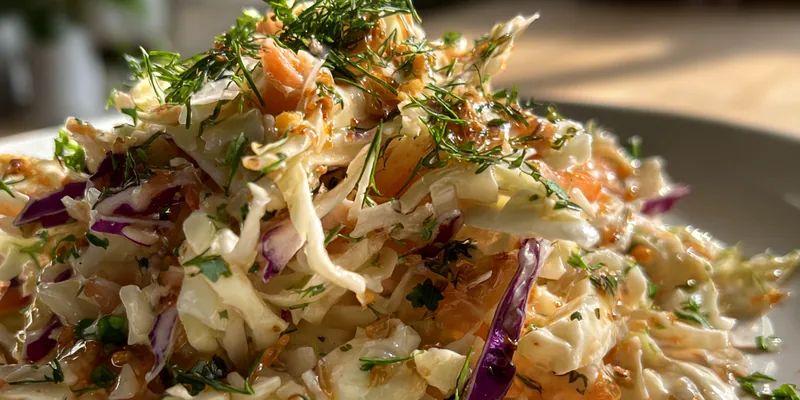
Coleslaw is a classic American side dish that combines fresh vegetables with a creamy dressing. Its crunchy texture and tangy flavor make it a perfect accompaniment to a variety of meals. Originating in the 18th century, coleslaw has evolved into numerous variations, but the essence remains the same: a delightful medley of flavors and textures. Whether served at barbecues, picnics, or holiday gatherings, coleslaw consistently impresses with its refreshing taste. This homemade version is not only easy to make but also customizable to suit your preferences.

Why This Coleslaw Works
The success of this coleslaw lies in the balance of flavors and textures. Combining crunchy vegetables with a creamy dressing creates an enjoyable contrast that keeps you coming back for more. The acidity from the apple cider vinegar and lemon juice cuts through the richness of the mayonnaise, adding brightness to the dish. Additionally, allowing the coleslaw to chill enhances the flavors, as the vegetables absorb the dressing and soften slightly, making each bite harmonious.
What sets this coleslaw apart is its simplicity and adaptability. You can easily modify the recipe by adding ingredients like apples, raisins, or nuts to enhance sweetness and texture. The dressing can also be adjusted to create a lighter version using yogurt or sour cream instead of mayonnaise. This versatility allows you to cater to different tastes and dietary preferences while keeping the essence of coleslaw intact.
💡 Professional Tip
For the best results, use fresh, high-quality ingredients. When shredding the cabbage, aim for thin, uniform pieces to ensure even distribution in the coleslaw. If you'd like a crunchier coleslaw, serve it immediately after mixing the ingredients. However, if you prefer a softer texture, allow it to sit in the refrigerator for a few hours. Lastly, always taste and adjust the seasoning before serving to ensure the flavors are balanced.
Frequently Asked Questions
Yes, you can make coleslaw ahead of time. In fact, preparing it a few hours or even a day in advance allows the flavors to meld beautifully. Just be sure to store it in an airtight container in the refrigerator. However, if you're adding any delicate ingredients like apples, consider adding them right before serving to maintain their freshness.
If you're looking for substitutions, you can use different types of cabbage such as Napa or savoy for a unique twist. For the dressing, Greek yogurt can replace mayonnaise for a lighter option, and honey can be swapped for sugar to add natural sweetness. Additionally, you can include other vegetables like bell peppers or radishes for added crunch and flavor.
Coleslaw is ready when the vegetables are well-coated with the dressing and have absorbed some of its flavors. If you prefer a crunchier texture, serve it immediately after mixing. For a softer texture with more integrated flavors, let it chill in the refrigerator for at least 30 minutes. Always taste and adjust the seasoning before serving to ensure it meets your palate.
Freezing coleslaw is not recommended, as the texture of the vegetables can become mushy upon thawing. The mayonnaise-based dressing may also separate and lose its creamy consistency. If you have leftovers, it's best to store them in the refrigerator and consume them within a few days for optimal freshness.
Coleslaw pairs wonderfully with grilled meats, sandwiches, and fried foods. It's a staple at barbecues and picnics, complementing dishes like pulled pork, fried chicken, and burgers. You can also serve it as a topping on tacos or as a refreshing side for a heavy meal, adding a crunchy contrast.
Coleslaw can be stored in an airtight container in the refrigerator for up to 3-5 days. However, its texture and flavor may change over time, so it's best to consume it within the first few days. If the coleslaw appears watery or the vegetables have wilted significantly, it's time to discard it.
To adjust the spice level of your coleslaw, consider adding ingredients like jalapeños or a dash of hot sauce to the dressing. For a milder taste, stick with the basic recipe and allow diners to add their preferred spice level at the table. It's all about balancing the flavors to suit your preferences.
Reheating coleslaw is generally not recommended due to its raw vegetable ingredients. However, if you must reheat it, microwave it on low power in short intervals to avoid wilting the vegetables. Keep in mind that the texture may not be the same as when it was freshly made.
Recipe Troubleshooting Guide
Too Dry
Problem: Sometimes coleslaw can turn out too dry, lacking the creamy dressing that makes it enjoyable.
Solution: If your coleslaw is too dry, simply add a bit more mayonnaise or dressing. Mix in small amounts until you reach your desired consistency. Another option is to sprinkle in a little apple cider vinegar or lemon juice for added moisture and flavor.
Not Crispy
Problem: If your coleslaw lacks crunch, it may be due to the vegetables being too old or not shredded properly.
Solution: To remedy this, ensure you're using fresh vegetables, as older ones can become limp. Additionally, shred the cabbage and other ingredients finely to enhance their texture. Letting the coleslaw sit in the fridge for a bit can also help improve its crispness.
Overcooked
Problem: Coleslaw should not be cooked, but if you inadvertently heat it or let it sit too long, the vegetables may lose their crispness.
Prevention: If this happens, consider adding fresh, raw vegetables to restore some of the crunch. You can also re-season with vinegar or lemon juice to bring back some brightness.
Undercooked
Problem: Coleslaw is served raw, so the term ‘undercooked’ may refer to the vegetables not being shredded or mixed well.
Recovery: Make sure to properly shred all vegetables into uniform pieces for even mixing. Toss the coleslaw thoroughly to ensure that all ingredients are well incorporated into the dressing.
Burnt
Problem: Coleslaw itself shouldn't be burnt, but if any ingredients are cooked, they may become charred.
Prevention: To fix this, you may need to either start over with fresh ingredients or balance out the burnt flavor by adding more of the fresh raw vegetables. A bit of lemon juice can also help cut through the bitterness.
Flavor Balance
Too Sweet: If your coleslaw is too sweet, it's often due to excess sugar in the dressing.
Too Salty: For a salty coleslaw, you may have added too much salt or used salty ingredients, like certain types of mayonnaise.
Bland: A bland coleslaw can be improved with additional seasoning, such as salt, pepper, or more vinegar.
Key Ingredients
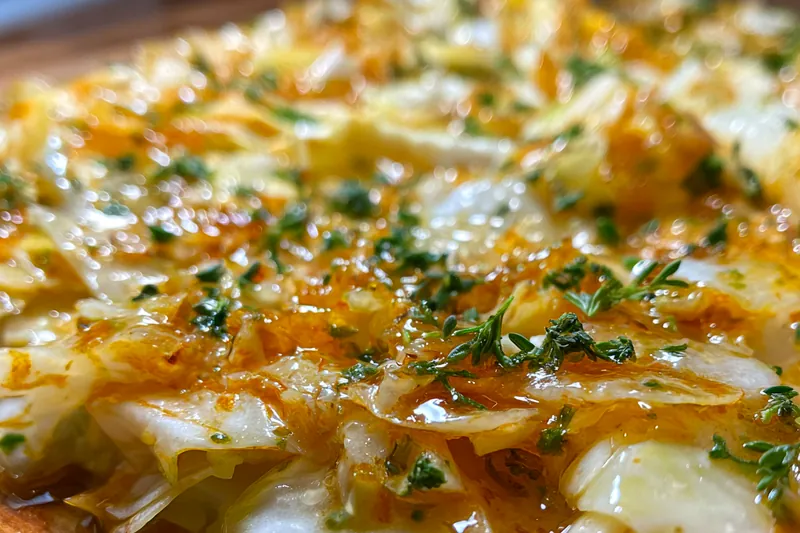
The primary ingredients in coleslaw are cabbage and carrots, which provide a crunchy texture that is essential for this dish. Green cabbage is often used, but red cabbage adds a pop of color and a slightly different flavor. Carrots contribute sweetness and vibrant orange color, enhancing the dish's visual appeal. Freshness is key, so always choose crisp vegetables for the best results.
Seasonings play a crucial role in elevating the taste of coleslaw. The dressing, typically made with mayonnaise, vinegar, and mustard, adds creaminess and tanginess to the mix. Apple cider vinegar is commonly used for its mild flavor, while sugar balances the acidity. Experimenting with herbs and spices can also personalize the coleslaw and enhance its flavor profile.
Essential Ingredient Notes
- Main Ingredient: Green cabbage is the backbone of coleslaw, providing the primary texture. Choose a firm head with crisp leaves for optimal freshness. The shredding method can also affect the final product; a mandoline or sharp knife gives the best results. If using red cabbage, it can be combined to create a colorful medley.
- Second Key Ingredient: Carrots are vital for adding sweetness and color to coleslaw. Freshly grated carrots provide a bright orange hue and a slight crunch that complements the cabbage. For added convenience, pre-grated carrots can be used, but fresh ones yield the best flavor. Always ensure they are tightly packed in the mix for a well-balanced coleslaw.
- Essential Seasoning: The dressing is where coleslaw gets its signature flavor. Mayonnaise is the most common base, but alternatives like Greek yogurt can lighten the dish. Apple cider vinegar adds a tangy kick, while Dijon mustard provides depth. It's essential to taste and adjust the dressing to achieve the desired flavor balance.
Cooking Process
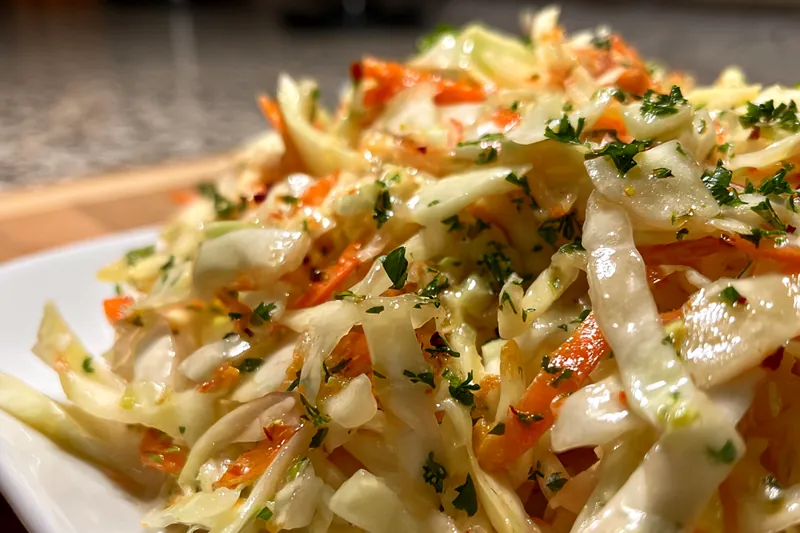
Making coleslaw is a straightforward process that begins with preparing the vegetables. Shred or chop the cabbage and carrots into bite-sized pieces to ensure they mix well with the dressing. The dressing is then combined in a separate bowl, allowing the flavors to blend before mixing with the vegetables. It's important to toss everything together thoroughly for an even coating.
After mixing, refrigerate the coleslaw to improve its flavor and texture. The chilling process softens the vegetables and enhances the dressing's flavor absorption. Before serving, stir the coleslaw again to redistribute the dressing, ensuring every bite is deliciously coated. Enjoy your refreshing coleslaw as a perfect accompaniment to your favorite meals.
Key Technique
The key technique in making coleslaw is ensuring that the vegetables are shredded uniformly. This not only aids in even mixing but also enhances the overall presentation of the dish. Additionally, letting the coleslaw sit for a while before serving allows the flavors to meld, resulting in a more cohesive taste. Adjusting the seasoning before serving is crucial for balancing flavors to your preference.
Coleslaw
📋 Ingredients
Main Ingredients
- 1 cup mayonnaiseCreamy base for dressing
- 2 tablespoons apple cider vinegarAdds tanginess
- 1 tablespoon Dijon mustardProvides depth of flavor
- 2 tablespoons sugarBalances acidity
Sauce/Seasoning
- 1 small green cabbage, shreddedCore ingredient
- 1 cup carrots, gratedAdds sweetness
- 1/2 cup red cabbage, shreddedEnhances color
- 1/2 cup celery, choppedFor crunch
- 1/4 cup green onions, slicedFresh flavor
- 1 tablespoon lemon juiceAdds brightness
Instructions
Prepare the Vegetables
Begin by thoroughly washing the cabbage and carrots. Shred the green cabbage and red cabbage into thin strips. Grate the carrots and chop the celery and green onions.
Mix the Dressing
In a large bowl, combine the mayonnaise, apple cider vinegar, Dijon mustard, sugar, lemon juice, and celery seed. Whisk until smooth and well-blended. Adjust seasoning with salt and pepper to taste.
Combine Ingredients
Add the shredded cabbage, grated carrots, chopped celery, and sliced green onions to the bowl with the dressing. Toss the mixture until the vegetables are evenly coated with the dressing.
Chill the Coleslaw
Cover the bowl with plastic wrap and refrigerate the coleslaw for at least 30 minutes. This allows the flavors to meld and the vegetables to soften slightly. Stir the coleslaw again before serving.
Serve
Once chilled, give the coleslaw a final toss and taste for seasoning. Serve it chilled as a side dish. It pairs wonderfully with barbecue, sandwiches, or fried foods.
Recipe Notes & Tips
Storage Tips
Store leftover coleslaw in an airtight container in the refrigerator for up to 3-5 days. If the coleslaw becomes watery, simply drain off excess liquid before serving. Avoid freezing as it can affect the texture of the vegetables.
Serving Ideas
Coleslaw can be served as a side dish for barbecues, picnics, or family gatherings. It also makes a great topping for pulled pork sandwiches or fish tacos. For a twist, try using it as a filling for wraps or as a crunchy salad base.
Variations
Feel free to customize your coleslaw by adding different ingredients such as apples for sweetness, raisins for a touch of chewy texture, or nuts for added crunch. A vinegar-based dressing can create a lighter version, while adding spices can give it a unique flavor. Experiment to find your perfect coleslaw combination!